
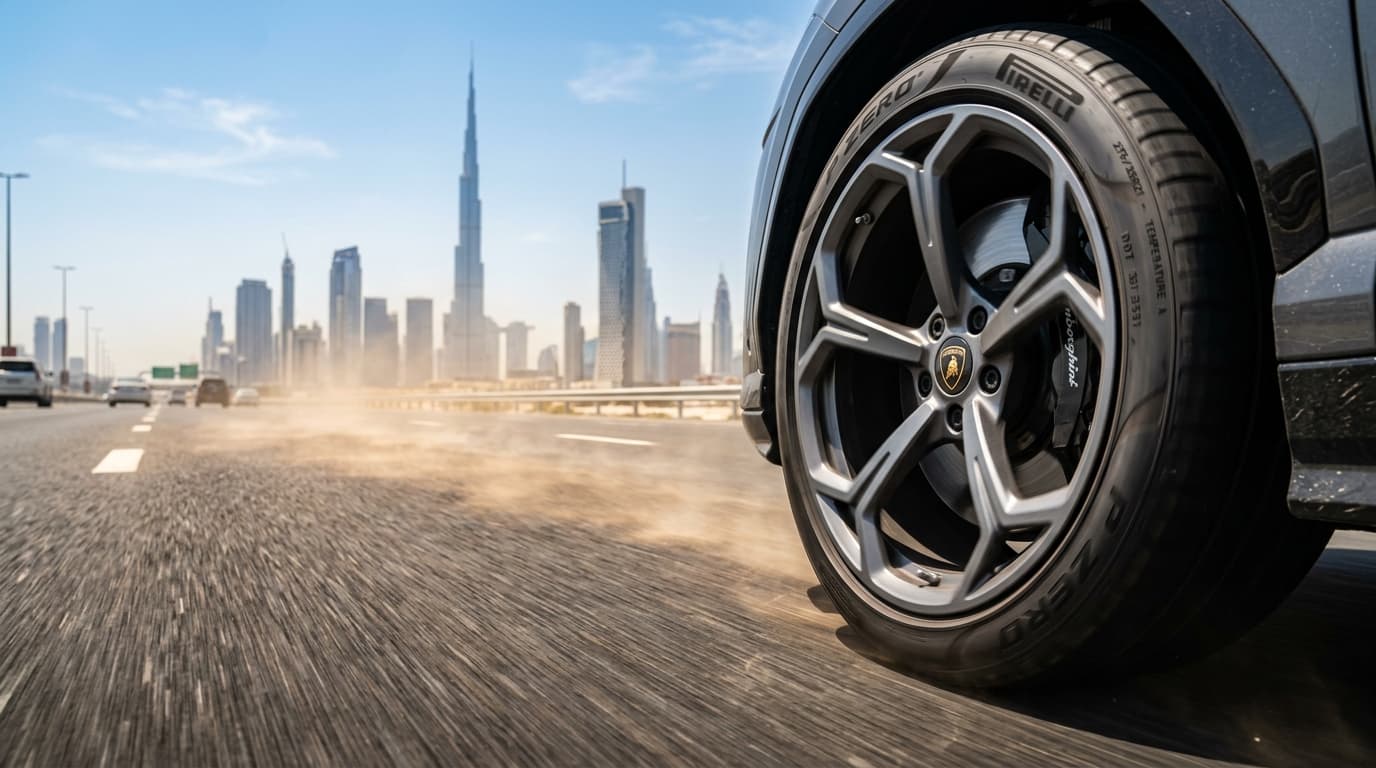
“Dubai summer asphalt regularly exceeds 60°C. Learn why tyre pressures spike dangerously, how heat degrades rubber compounds, and the essential steps to avoid highway blowouts.”
During UAE summers between May and September, ambient air temperatures frequently hit 48°C, while tarmac asphalt temperatures on highways like Sheikh Zayed Road (E11) and Emirates Road (E611) routinely surpass 60°C to 65°C. For automobile tyres, this creates immense thermal stress that softens tread rubber, accelerates dry-rot cracking, and causes internal air pressure to surge dangerously.
01.The Thermal Physics of Tyre Pressure in the UAE
As tyre temperatures climb, the air inside expands. For every 10°C increase in temperature, your tyre pressure increases by approximately 1 to 2 PSI. A tyre set to 34 PSI on a cool morning can easily surge to 40 PSI or higher during a 120 km/h highway run across Dubai, stressing the sidewalls and increasing the risk of structural failure if the rubber has minor punctures or dry rot.
Key Advisory Points:
- Check pressures strictly in the early morning before driving or after the car has rested in shaded parking for 3 hours.
- Never deflate hot tyres after a highway drive; the pressure will drop below safe levels once the tyre cools down.
- Always inspect the vehicle placard on the driver-side door jamb for manufacturer recommended cold PSI.
02.Top Warning Indicators of Heat-Induced Tyre Failure
Dubai highway patrols and roadside rescue services respond to hundreds of heat-related tyre blowouts every summer. Most blowouts give advance warning signs that drivers overlook:
Key Advisory Points:
- Sidewall Bulges: Indicates broken internal radial cords. Immediate explosive hazard.
- Fine Spiderweb Cracks: Known as dry-rot or UV degradation, caused by direct Arabian sun exposure.
- Vibration through the steering wheel: Often a sign that tread layers are de-laminating or tyres are out of dynamic balance.
03.Preventive Doorstep Measures
Having a certified mobile technician inspect your tyres at your villa or office parking saves time and prevents catastrophic breakdowns. Computerized dynamic wheel balancing and digital tread depth measurement ensure even heat dispersion across the entire contact patch.
- Check tyre pressures every 14 days when cold.
- Replace tyres that have exceeded 5 years from their DOT manufacturing date.
- Ensure dynamic wheel balancing is accurate to prevent heat hot-spots.
Frequently Asked Questions
Q:What PSI should I set my tyres to in Dubai during summer?
Follow your manufacturer's recommended cold tyre pressure found on your driver's door jamb sticker (typically 32–36 PSI for sedans and 35–40 PSI for SUVs). Never guess or exceed maximum sidewall PSI.
Q:Can high road temperatures cause tyres to melt in Dubai?
Tyres do not melt into liquid, but rubber compounds soften significantly, accelerating tread wear by up to 40% and making them vastly more vulnerable to sharp debris and nails.
Published by Tyre Fixs Technical Team
Our certified tyre technicians operate custom-built mobile workshops across Dubai 24/7, providing computerized wheel balancing, laser alignment checks, and emergency roadside puncture repairs.